

03 Dec Wallet Security in Cross-Chain Swaps: What a Rabby Extension Download Can—and Cannot—Protect
Consider a familiar US DeFi scenario. You find a promising token on one network, but your funds are sitting on another. A cross-chain swap appears to offer a quick solution: connect a browser wallet, choose the source and destination assets, approve the transaction, and wait for settlement. Then the wallet displays a warning, the route involves several contracts, and the requested approval seems larger than the amount you intended to trade. The important question is not simply whether the swap is legitimate. It is whether you understand what you are authorizing.
This is where wallet security is often misunderstood. A browser extension can improve transaction visibility and reduce avoidable mistakes, but it cannot make an unsafe protocol safe or recover a secret phrase that has been exposed. The useful mental model is not “the wallet protects every transaction.” It is “the wallet is a security boundary and an interpretation tool.” It helps separate your private key from websites and can present transaction details, while you remain responsible for approving the correct action.
A realistic case: the swap that looked simpler than it was
Suppose a user wants to move a dollar-pegged asset from one Ethereum-compatible network to another. The interface advertises a cross-chain swap, but the underlying process may involve more than one operation: approving a token contract, depositing or locking funds, interacting with a bridge or routing service, and receiving an asset on the destination network. In some designs, the user receives a representation of the original asset rather than the native asset itself. “One click” describes the interface, not necessarily the underlying risk model.
The first myth is that a wallet can judge an entire application by appearance alone. A wallet may identify the contract being called, display a simulation, or flag unusual behavior. Those features are valuable because they turn opaque data into something a user can inspect. Yet warnings are not legal verdicts, and an absence of a warning is not proof that a protocol is sound. Contract code, economic incentives, liquidity conditions, bridge assumptions, and governance risks remain outside the wallet’s complete control.
The second myth is that cross-chain swaps are merely ordinary swaps with an extra network fee. They are often more complicated. A single-chain swap usually depends on liquidity and contract execution within one network. A cross-chain transaction adds coordination between networks, message delivery, relayers, validators, liquidity providers, or a separate settlement mechanism, depending on the design. Each additional dependency creates another place where delay, pricing error, insolvency, or operational failure can matter.
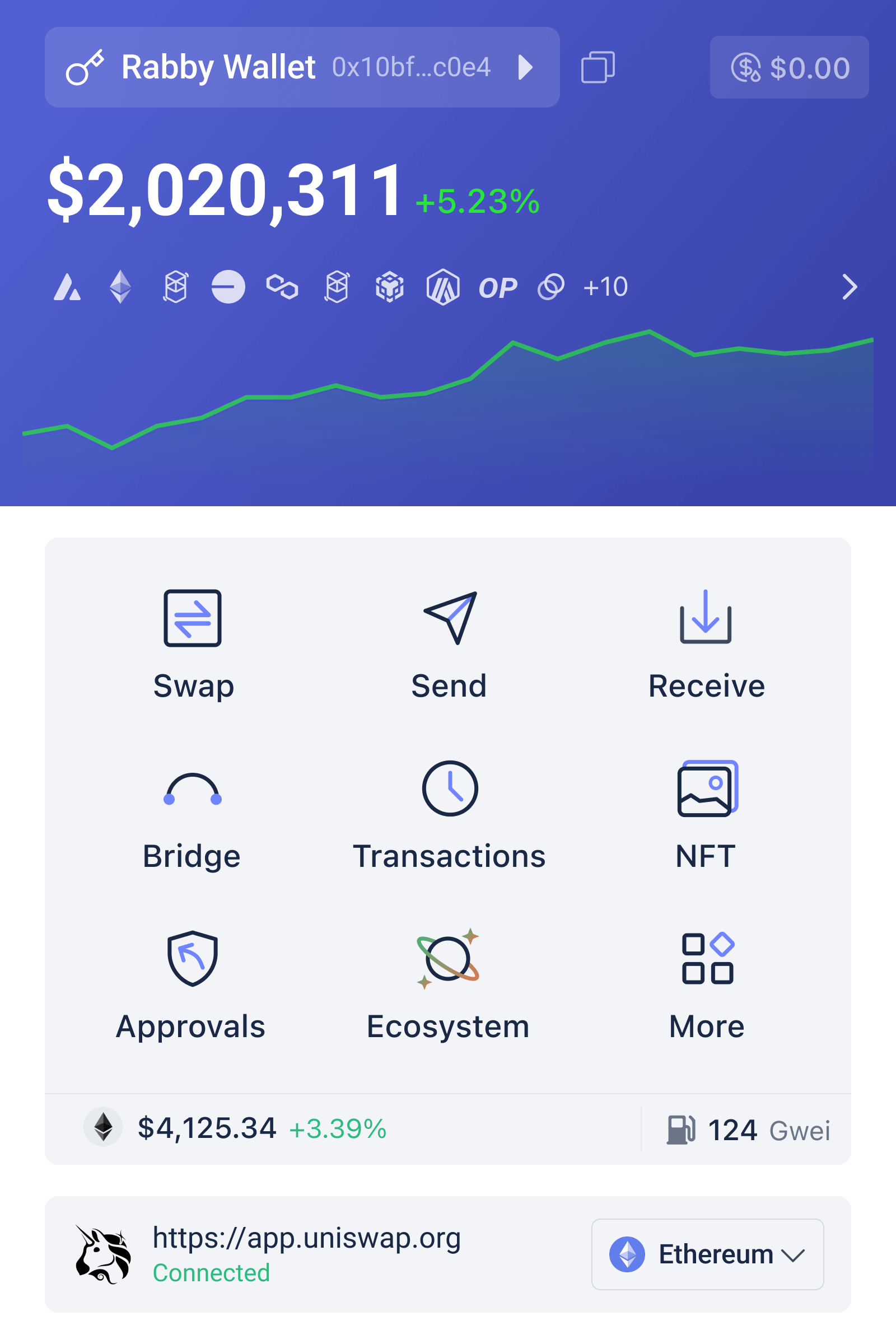
Before installing any wallet extension, the practical security problem begins with source verification. Search results, paid advertisements, fake support pages, and imitation browser extensions can all be used to distribute malicious software. A safer installation process starts from a trusted project-controlled route, checks that the browser listing and publisher information are consistent, and avoids downloading a file from an unsolicited message. Readers who need the official installation path can review the rabby wallet extension resource, then still verify the extension inside their own browser before entering any sensitive information.
What a browser wallet actually protects
A non-custodial wallet generally keeps the signing capability under the user’s control. When a decentralized application requests a transaction, the wallet can mediate the request rather than handing the website unrestricted access to the private key. This separation is fundamental: the website can ask for a signature, but it should not be able to read the secret material used to create that signature.
That boundary is powerful, but limited. If a user approves a malicious transaction, the wallet may be doing exactly what it was instructed to do. If a seed phrase is typed into a fake website, copied into cloud notes, photographed, or stored in an exposed browser profile, the extension’s protections become largely irrelevant. A wallet can constrain access to keys; it cannot compensate for a compromised recovery phrase or deliberate approval of an unknown contract.
There is also a distinction between a transaction and a token approval. A transaction may transfer a specified amount immediately. An approval can give a contract permission to spend a token later, sometimes up to a very large allowance. That does not mean every large allowance will be used, but it expands the consequences if the approved contract is compromised or if the user interacts with it again under different conditions. After a high-risk interaction, reviewing and, where appropriate, revoking unnecessary allowances is a sensible part of account hygiene.
Hardware wallets add another layer by keeping signing keys in a separate device. They can reduce the impact of malware on a computer, but they do not eliminate social engineering or deceptive transaction requests. A person can still confirm a harmful action on the hardware device if the displayed information is misunderstood. Security is therefore layered: verified software, protected recovery material, careful browsing, transaction review, and controlled exposure of funds all work together.
How to review a cross-chain transaction
A useful review process asks four questions before approval. First, what asset is leaving the source network, and what asset is expected on the destination network? Similar names and symbols can conceal different contracts. Second, which contracts and permissions are involved? An approval request should make sense for the action being performed. Third, what is the total economic cost, including network fees, swap fees, bridge fees, slippage, and any fee paid in a token the user may not hold on the destination chain? Fourth, what happens if the route is delayed or only partially completed?
Slippage deserves special attention. It is the permitted difference between the expected execution price and the final price. A narrow tolerance may cause a transaction to fail when liquidity is thin or markets move quickly. A wide tolerance increases the range in which the trade can execute at an unfavorable price. The correct setting depends on the asset, route, liquidity, and urgency; there is no universal “safe” percentage. A large tolerance is not a guarantee of completion, and a small tolerance is not a guarantee of a good price.
Transaction simulation can help reveal the expected balance changes and contract effects before signing. The non-obvious limitation is that a simulation is conditional. It reflects an assumed state of the network at a particular moment. Prices, balances, permissions, liquidity, and contract behavior can change between simulation and confirmation. A simulation is therefore evidence about a proposed action, not an insurance policy against every possible outcome.
For a first cross-chain transaction, a small test amount is often more informative than a confident guess. It can reveal whether the destination asset is usable, whether the user has enough native gas currency to transact after arrival, and how long the route typically takes. This approach has an obvious cost: the user may pay fees twice and may receive a less efficient execution. The trade-off is between capital efficiency and operational learning. For unfamiliar routes, reducing the amount at risk may be more valuable than optimizing every basis point.
Myths that create avoidable exposure
Myth: “The wallet warning means the transaction is definitely malicious.”
Reality: a warning is a risk signal, not a complete classification. Some legitimate contracts are complex or difficult to interpret, while some harmful actions can appear ordinary. Treat warnings as prompts to stop, inspect the destination, compare the intended action with the request, and seek independent confirmation.
Myth: “If the site cannot see my private key, it cannot steal my funds.”
Reality: a site does not need the private key if it can persuade the user to sign a harmful approval or transfer. The security boundary protects the key from direct extraction; it does not prevent authorized instructions from having damaging consequences.
Myth: “A bridge is just a pipe between blockchains.”
Reality: a bridge or cross-chain router is an economic and technical system with assumptions about custody, validation, liquidity, messaging, or settlement. The user should understand what asset is being received and what failure process exists if the route is interrupted. A transaction can be cryptographically valid while the economic outcome is still poor.
Myth: “Keeping all funds in one browser wallet is convenient and therefore safer.”
Reality: convenience concentrates risk. A separate wallet for experimentation, a smaller hot-wallet balance for routine activity, and a more protected storage arrangement for long-term holdings can limit the damage from one bad approval or compromised website. This creates additional management work, so the structure should remain simple enough to use consistently.
A reusable security framework for DeFi users
Think in three layers: authenticity, authorization, and aftermath. Authenticity asks whether the extension, website, contract address, and network are what they claim to be. Authorization asks what exact permission or transfer the signature creates. Aftermath asks what remains exposed once the transaction succeeds: token allowances, destination-chain gas needs, wrapped assets, custody assumptions, and the ability to exit the position.
This framework is more reliable than relying on a single green checkmark or a familiar brand. It also scales beyond cross-chain swaps. The same questions apply to yield platforms, NFT marketplaces, liquid staking applications, and governance systems. In each case, the wallet is most useful when it makes the user pause at the boundary between intention and authorization.
There is no recent project-specific news to incorporate into this assessment, so the durable issue is the mechanism itself rather than a newly announced feature. Looking ahead, the most meaningful signals will be improvements in transaction interpretation, clearer disclosure of cross-chain dependencies, more understandable allowance management, and recovery processes that do not encourage users to reveal secret phrases. If those tools become more accurate without encouraging blind approval, they could reduce routine errors. If interfaces merely hide complexity behind a single button, convenience may increase faster than safety.
The practical conclusion is modest but important. Downloading and installing a reputable wallet extension can establish a better signing boundary and provide useful transaction context. It cannot replace source verification, careful contract review, protected key storage, or an understanding of bridge risk. In the opening scenario, the safest user is not the one who finds the fastest route. It is the one who can explain what leaves the source chain, what arrives on the destination chain, which permissions are granted, and what happens if the route does not behave as expected.
Frequently asked questions
Is a browser wallet safe for cross-chain swaps?
It can be appropriate for routine DeFi use when installed from a verified source and used with disciplined transaction review. Safety depends on the wallet software, the connected application, the contracts involved, the user’s key management, and the cross-chain design. No browser wallet can remove smart-contract, bridge, market, or user-approval risk.
Should I approve an unlimited token allowance?
Not automatically. An allowance can make repeated interactions easier, but it also gives the approved contract broader spending permission. A limited allowance may require more transactions and fees, while an unlimited allowance may increase exposure if the contract or website later becomes unsafe. Review the amount, the contract, and whether the convenience is worth the additional permission.
What should I do if a cross-chain swap is delayed?
Do not immediately submit another transaction simply because the interface appears slow. Check the source transaction status, destination network, route instructions, and any stated recovery or claim process through the application’s verified interface. Repeating an action can create a second exposure or duplicate the intended trade. If the route depends on a third party, its operational status may matter as much as the wallet display.

Sorry, the comment form is closed at this time.